 Reviews



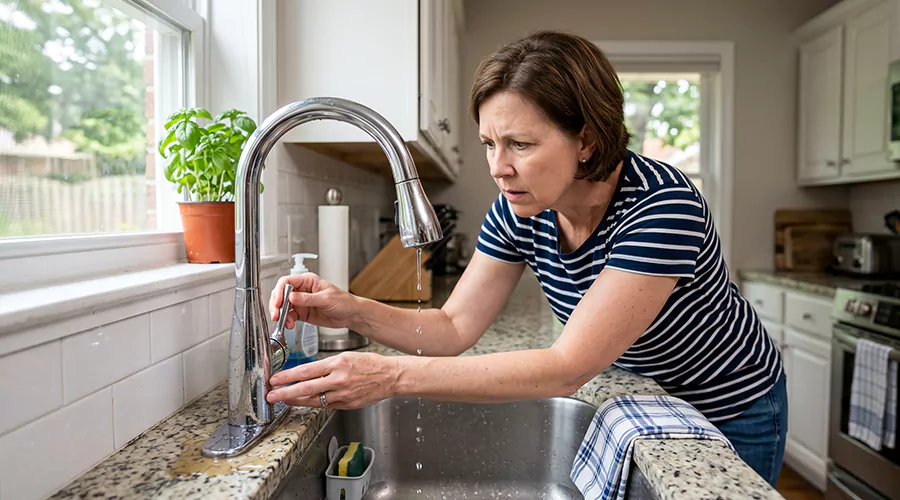
A kitchen faucet usually leaks because its internal cartridge or sealing components have worn out. A damaged pull-down hose or loose connection can also cause water to collect beneath the sink. Professional kitchen faucet repair typically costs 100–250 in the United States in 2026. The location of the leak provides the first clue. A persistent drip from the spout usually indicates a problem inside the faucet's shutoff mechanism. Water appearing only while the faucet operates may originate from a different component. Identifying the source before purchasing replacement parts can prevent unnecessary repairs.
What Are the Most Common Causes of a Kitchen Faucet Leak?
Kitchen faucets contain several components that control water flow and prevent water from escaping around moving parts. Regular use gradually wears these components. Mineral deposits can also interfere with their operation.
Common causes include:
- Worn cartridge: The internal valve no longer shuts off water completely.
- Damaged O-rings: Water escapes around the rotating spout or faucet body.
- Loose supply connections: Water drips from fittings beneath the sink.
- Damaged spray hose: Water escapes from a pull-down or pull-out hose.
- Worn internal seals: The faucet develops moisture around its handle.
- Mineral buildup: Deposits interfere with internal valve movement.
- Damaged faucet body: Cracks or corrosion allow water to escape.
Moen identifies a worn cartridge as a common cause of dripping from the spout. It also identifies O-rings as potential sources of leaks around the faucet base. The correct repair depends on the faucet's design.
How Can You Identify Where the Kitchen Faucet Is Leaking?
The location and timing of the leak can help identify the failed component. Begin by observing whether water appears while the faucet is running or after it has been switched off.
| Leak Location | Possible Cause | Initial Investigation |
|---|---|---|
| End of spout | Worn cartridge | Observe after shutting off the faucet |
| Around handle | Damaged cartridge seal | Inspect while water runs |
| Around spout base | Worn O-rings | Dry the area and test |
| Beneath sink | Supply connection | Inspect accessible fittings |
| Pull-down spray hose | Damaged hose or connection | Test the spray attachment |
| Faucet body | Internal damage | Trace where water first appears |
A leak around the base is particularly easy to misidentify. Water escaping from the handle can travel down the faucet body and collect around the mounting plate. The actual source may therefore be higher than the visible puddle.
How Does a Small Kitchen Faucet Leak Get Worse?
A small faucet leak can waste considerable water over time. A hidden leak beneath the sink creates another concern because repeated moisture can damage cabinet materials.
The following comparison shows how the problem can progress.
| Stage | Typical Symptoms | Possible Consequence | 2026 Cost Reference |
|---|---|---|---|
| Early | Occasional spout drip | Water waste | Minor parts replacement |
| Developing | Continuous dripping | Higher water consumption | 100–250 for kitchen faucet repair |
| External leak | Water around the handle | Moisture reaches the faucet base | Depends on the failed component |
| Hidden leak | Water beneath the sink | Cabinet damage | Additional repairs may be needed |
| Internal failure | Several components affected | Faucet replacement may be necessary | 200–500 for many kitchen faucet replacements |
The EPA estimates that a faucet dripping once per second can waste more than 3,000 gallons annually. Current 2026 U.S. kitchen faucet replacement estimates range from approximately $200 to $500 for many installations. The actual cost depends on the type of faucet and the work required.
What Warning Signs Indicate a Kitchen Faucet Problem?
Kitchen faucet leaks often develop gradually. Changes in water flow or handle movement can appear before water becomes visible beneath the sink.
Watch for these warning signs:
- The faucet continues dripping after the handle is closed.
- Water collects around the handle during operation.
- The spout develops moisture around its rotating base.
- A pull-down sprayer leaks when extended.
- Water appears beneath the sink after washing dishes.
- The faucet becomes unusually difficult to operate.
- Mineral deposits accumulate around connections.
- The drip becomes more frequent over time.
- A replacement cartridge fails to stop the leak.
- The cabinet beneath the faucet develops a musty smell.
A leak beneath the sink deserves particular attention because damage may develop before water reaches the kitchen floor.
Why Does My Kitchen Faucet Drip After I Turn It Off?
A persistent drip after shutoff usually indicates that the internal valve is no longer sealing correctly. Many modern kitchen faucets use cartridges that control water flow and temperature. When the cartridge's sealing surfaces become damaged, a small amount of water can continue passing through the spout. Moen identifies the cartridge as a common cause of persistent spout dripping in its kitchen faucet designs. Different models require different cartridges.
Before removing any components, observe whether the faucet continues dripping several minutes after shutoff. A few drops of remaining water immediately after use do not necessarily indicate an ongoing supply leak. Continued dripping requires further inspection.
Why Is My Kitchen Faucet Leaking Around the Base?
Water collecting around the faucet base may originate from damaged O-rings or a leak farther up the faucet body. The first step is determining whether the water actually begins around the base.
Moen recommends checking the handle because water escaping from that area can travel downward and make the base appear to be leaking.
Perform this simple test:
- Dry the entire faucet.
- Wrap a dry paper towel around the handle.
- Turn on the water.
- Observe whether the towel becomes wet.
- Check the rotating spout connection.
- Inspect the mounting area.
- Record where water appears first.
If the handle remains dry but water forms around the rotating spout, the spout seals deserve attention. Use model-specific replacement parts rather than assuming every kitchen faucet uses identical O-rings.
Can a Pull-Down Faucet Hose Cause a Leak?
Pull-down faucets contain an additional flexible hose that moves whenever the spray head is extended. Repeated movement can gradually affect the hose or its connections. Water may then collect inside the cabinet during faucet operation. A damaged spray hose can produce symptoms that resemble a leaking supply line.
To investigate:
- Dry the cabinet and accessible hoses.
- Run water through the normal spout.
- Extend the pull-down spray head.
- Operate its available spray settings.
- Check whether water appears around the hose.
- Inspect the connection beneath the sink.
Some Delta pull-down faucets use quick-connect fittings. A connection that is not fully seated can leak, while a damaged hose may require replacement. Never attempt to repair a pressurized hose with ordinary household adhesive.
Can You Diagnose the Leak Yourself?
A staged inspection is one of the simplest ways to identify a kitchen faucet leak. Testing one component at a time helps prevent confusion between water escaping from the faucet and moisture entering from another source.
Follow these steps:
- Prepare the area: Remove stored items from beneath the sink.
- Dry the faucet: Wipe the handle and spout completely.
- Inspect beneath the sink: Dry all accessible connections.
- Test the cold-water setting: Observe the faucet while water runs.
- Test the hot-water setting: Check whether the leak changes.
- Operate the sprayer: Extend the hose when one is installed.
- Turn the faucet off: Watch the spout for several minutes.
- Check beneath the sink again: Identify the first wet connection.
A persistent supply-line leak may continue even when the faucet is not being used. If water appears beneath the sink while the faucet remains off, inspect the pressurized supply connections.
How Much Does Kitchen Faucet Repair Cost in 2026?
Kitchen faucet repair costs depend on the failed component and the amount of labor required. Simple replacement parts are generally less expensive than professional installation or complete faucet replacement.
| Component or Repair | 2026 U.S. Cost |
|---|---|
| O-ring | 1–5 |
| Replacement cartridge | 10–100 |
| Replacement hose | 15–50 |
| Professional kitchen faucet repair | 100–250 |
| General professional faucet repair | 100–400 |
| Many complete kitchen faucet replacements | 200–500 |
These figures reflect published U.S. pricing for 2026. Labor and faucet design can significantly affect the total. An accessible cartridge or seal problem does not automatically require replacing the complete faucet.
When Should You Call a Professional?
Professional assistance becomes appropriate when the leak continues after the correct replacement components have been installed. Inaccessible plumbing or damage to the faucet body also warrants further investigation.
Seek professional assistance when:
- Water leaks from a damaged supply connection.
- The faucet body is cracked.
- A replacement cartridge fails to stop the leak.
- The correct replacement parts cannot be identified.
- Water is damaging the cabinet.
- Multiple internal components are severely corroded.
- A pull-down hose cannot be repaired safely.
A complete replacement may be appropriate when the faucet body itself has failed.
How Can You Prevent Another Kitchen Faucet Leak?
Regular inspection helps identify small leaks before they cause substantial water waste or cabinet damage.
Recommended maintenance includes:
- Clean the faucet according to manufacturer instructions.
- Remove mineral deposits from accessible surfaces.
- Avoid forcing stiff handles.
- Inspect pull-down hoses for visible damage.
- Keep stored items away from under-sink plumbing.
- Check connections periodically.
- Investigate persistent dripping promptly.
The EPA recommends inspecting faucet gaskets and exposed pipe fittings for signs of leakage.
Conclusion
If your kitchen faucet is leaking, identify where water first appears before replacing components. A persistent spout drip commonly indicates an internal cartridge problem. Water around the base may involve damaged O-rings, while moisture beneath the sink can originate from a spray hose or supply connection.
Perform a staged inspection and match replacement parts to the exact faucet model. Hidden leaks or damaged faucet bodies may require professional repair.
Frequently Asked Questions
Why does my kitchen faucet drip when turned off?
A worn cartridge or another internal sealing component may be allowing water through the closed valve.
Can a pull-down kitchen faucet leak underneath the sink?
Yes. The flexible spray hose or its connections can develop leaks during operation.
Why does my kitchen faucet leak only when it runs?
A damaged seal or connection may allow water to escape only when water is moving through the faucet.
Can I replace a kitchen faucet cartridge myself?
Some models have accessible cartridges. Follow the manufacturer's instructions and shut off the water before disassembly.
Does a leaking kitchen faucet always need replacement?
No. Many leaks involve replaceable cartridges or seals rather than damage to the complete faucet.